English
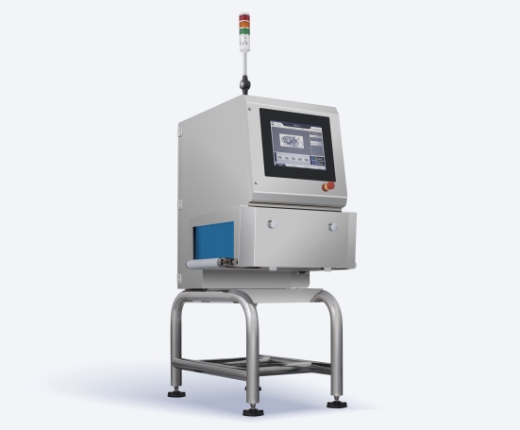
The core of an X-ray machine consists of a radiation source, detector, and control system:
Step 1
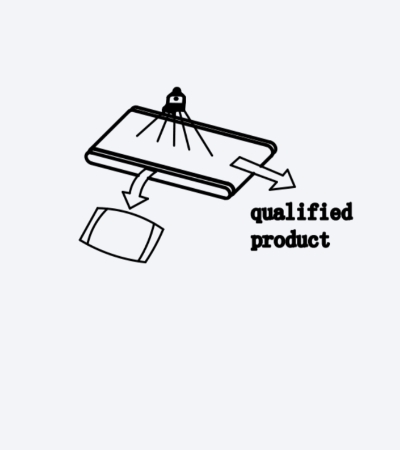
X-ray source: Installed inside the inspection chamber, it emits an X-ray beam downward.
Step 2
X-ray beam: Passes through the packaging and conveyor belt. Different materials, depending on their density and atomic mass, absorb varying amounts of energy.
Step 3
Detector: Captures the remaining X-ray energy and converts it into electrical signals.
Step 4
Control system: Processes the signals into images, allowing analysis to identify foreign objects, defects, or sealing issues.
Since food itself is generally composed of low-density, low-atomic-mass elements, while contaminants such as metal, glass, or bones have higher density and atomic mass, these differences enable foreign objects to be precisely identified in X-ray images—making it a highly efficient inspection method.

Compared to traditional metal detectors, X-ray machines provide more comprehensive and flexible detection capabilities:
Integrating X-ray scanners establishes highly effective Critical Control Points (CCPs) within your HACCP plan. It mitigates the risk of physical contamination, ensuring regulatory compliance and consumer safety.
Absolutely. The radiation used for food inspection is extremely low and does not affect the food's safety, taste, or texture. Our machines feature rigorous safety devices, ensuring X-ray leakage is strictly ≤1µSv/h to protect your operators.
Sensitivity depends on the absorption difference between the product and the contaminant. Key factors include the product's density and thickness, and the atomic mass of the contaminant. Note that product moisture and temperature do not affect X-ray accuracy.